How Are Lab-Grown Diamond Jewellery Made? The Science Behind the Sparkle
Diamonds are revered. They’re tied to deep time, pressure, and the idea that something beautiful needs millions of years to exist. So when someone hears “lab-grown diamond,” the first reaction is often confusion. Is it fake? Is it glass? Is it just clever marketing?
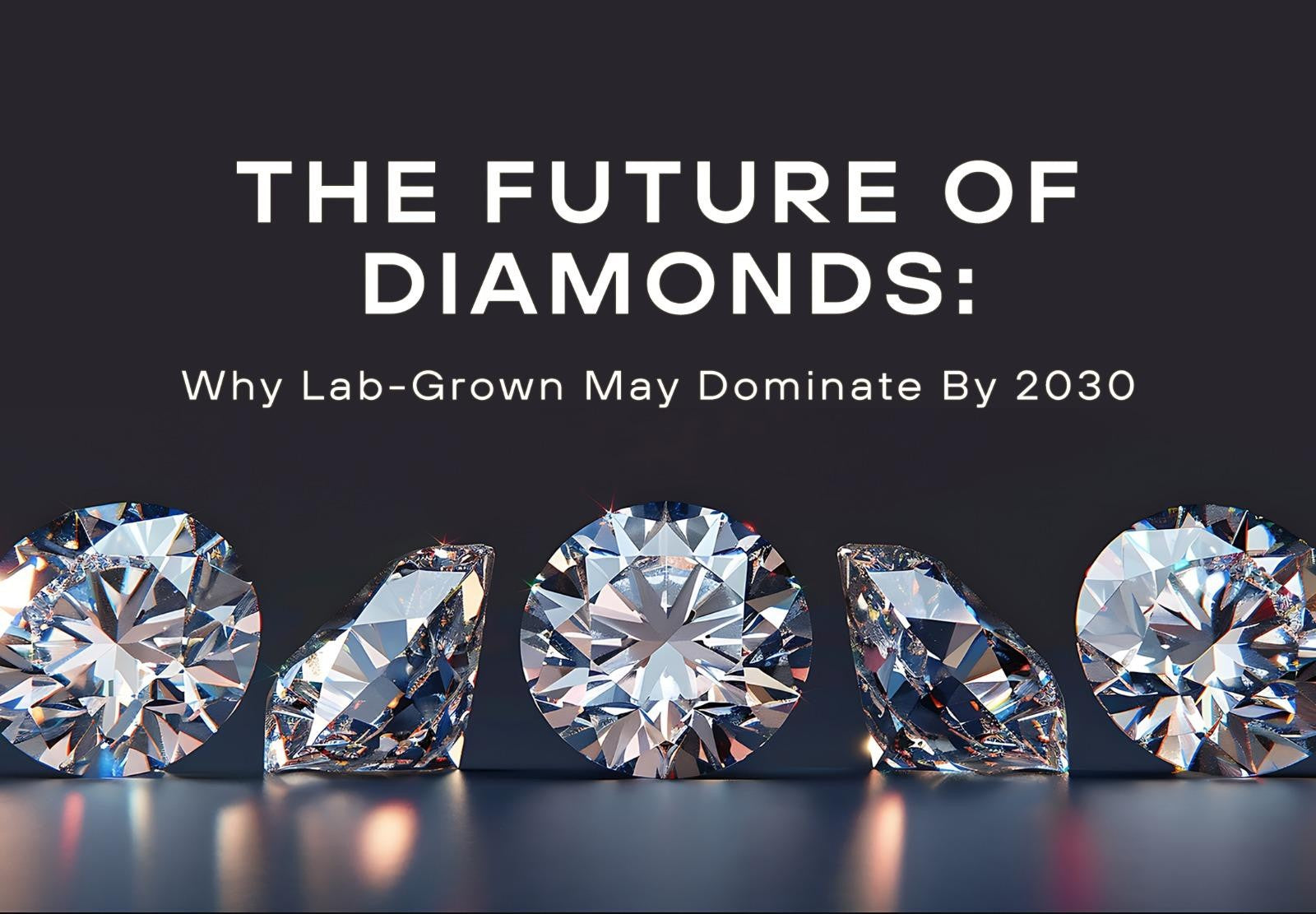
Not quite. The diamonds in lab-grown diamond jewellery are real diamonds. Same carbon structure. Same sparkle. Same hardness. The difference lies in how they come into the world.
Let’s understand from the experts at Anitraa, one of the best lab-grown diamond jewellery brands in India, on how that actually happens, without turning this into a chemistry lecture.
First, What Makes a Diamond a Diamond?
At the most basic level, a diamond is carbon. Not charcoal, not graphite, but carbon arranged in a very specific crystal structure. Each carbon atom bonds tightly to four others, forming a rigid lattice. That tight structure is what gives diamonds their hardness and that sharp, clean sparkle when light hits them.
Natural diamonds form deep inside the Earth under extreme heat and pressure. Lab-grown diamonds recreate those conditions in controlled environments. The end result is chemically and physically the same. A trained gemologist needs special equipment to tell them apart.
Method One: High Pressure, High Temperature
This is the older and more straightforward method, often called HPHT.
Imagine mimicking the Earth’s mantle, but inside a machine. A small diamond seed is placed in a chamber with carbon. Then the system is exposed to intense heat and pressure. We’re talking temperatures hotter than molten lava and pressures strong enough to crush steel.
Under those conditions, carbon melts and begins attaching itself to the diamond seed. Atom by atom, the crystal grows. Slowly. Deliberately. Over weeks, sometimes months, the diamond takes shape.
When it’s done, the rough stone looks unassuming. Cloudy. Uneven. Nothing like the polished gem you see in a ring. That comes later.
HPHT diamonds tend to have strong crystal structures and are often used for industrial purposes as well as jewellery. Some early versions had colour issues, but modern techniques have improved dramatically.
Method Two: Chemical Vapour Deposition
This one sounds more futuristic, and honestly, it is.
CVD starts with a thin diamond seed placed in a sealed chamber. The chamber fills with a carbon-rich gas, usually methane. Heat is applied until the gas breaks apart. When that happens, carbon atoms rain down onto the seed.
Layer by layer, the diamond grows. It’s almost meditative to imagine. Invisible atoms settling into place, building something solid you can eventually hold.
CVD allows for more control. Growth can be slower and more precise. Many lab-grown diamonds on the market today are made this way because the clarity and color can be carefully managed.
If HPHT feels like brute force, CVD feels like patience.
What Happens After the Diamond Grows?
Once the rough diamond is ready, the process becomes familiar. Cutting. Polishing. Grading. The same steps used for mined diamonds apply here.
You’ll still see inclusions sometimes. You’ll still see variations in colour. Perfection is rare, lab-grown or not. That’s part of the appeal.
And yes, lab-grown diamonds can be certified by major gemmological institutes. They are measured by the same four Cs: cut, colour, clarity, and carat.
Why People Are Paying Attention Now
Here’s where opinion comes in.
People are buying lab-grown diamond jewellery online in India, but lab-grown diamonds didn’t suddenly become popular because they got better looking. They became popular because people started asking harder questions. About cost. About ethics. About whether a symbol of love really needs to come from a mine.
Lab-grown diamonds usually cost less. Sometimes a lot less. That alone changes the conversation. Bigger stone, better quality, same budget. For many buyers, that’s not a small thing.
There’s also the environmental angle. Mining is resource-heavy. Lab-grown diamonds still use energy, but the footprint is easier to measure and improve. For some people, that matters. For others, not as much. Both reactions are honest.
So Is the Sparkle Any Different?
Short answer? No.
Light doesn’t care where a diamond came from. It reacts to angles, clarity, and cut. A well-cut lab-grown diamond will sparkle just as much as a mined one. Sometimes more, if the quality is higher.
The science behind the sparkle is the same. Carbon atoms. Crystal structure. Light bouncing and refracting until it catches your eye.
The story behind it, though, is newer. And maybe that’s the point.
Lab-grown diamonds don’t replace natural ones. They just add another option. One shaped by technology, choice, and a very human desire to make beautiful things in new ways.